More Than Handwriting: Understanding Occupational Therapy in K-12 Classrooms
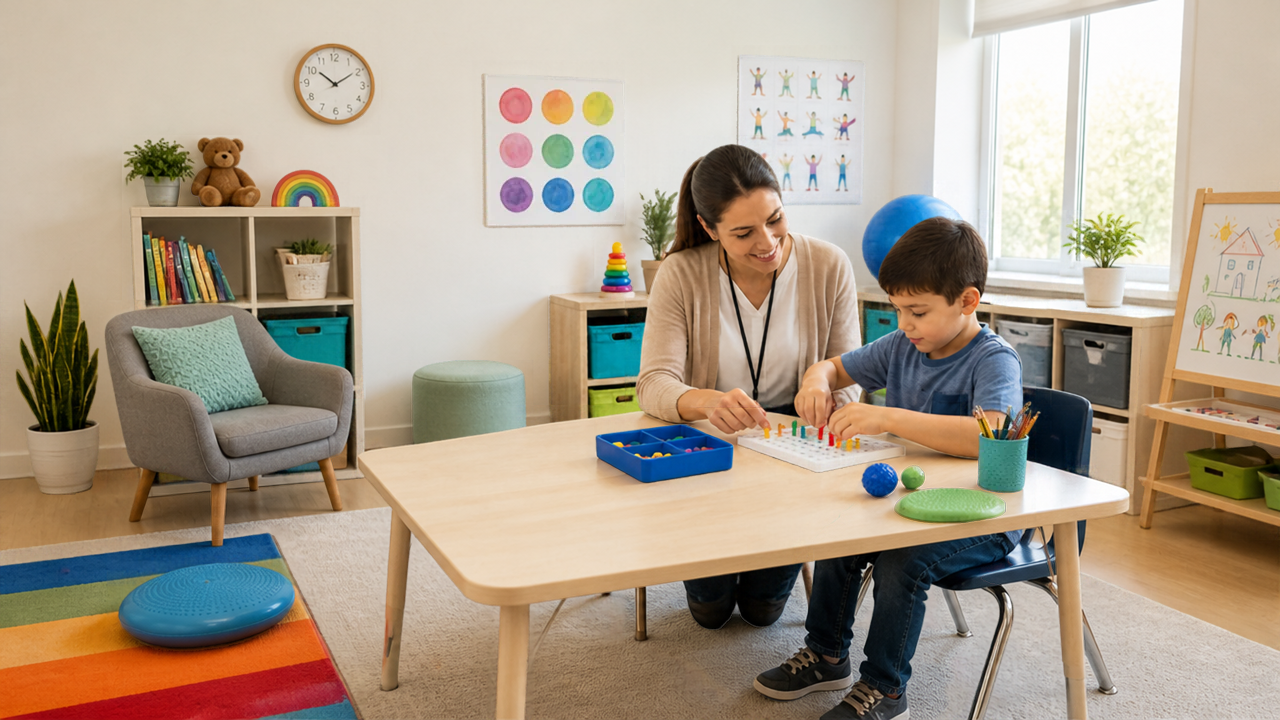
If you ask most people what a school-based occupational therapist (OT) does, they usually mention pencil grips and cursive. Helping a first-grader build fine motor skills is part of the job, of course. However, occupational therapy in K-12 classrooms goes much deeper than handwriting.
School OTs are the quiet architects of student independence. They look at a student’s entire school day, from navigating a noisy cafeteria to staying focused during math. Then, they find practical ways to remove the hidden barriers holding that student back. As school-based OT Emily Stringfield explains, handwriting is often just the surface symptom. “We really have to get to the root cause,” she says. “What are the skills missing underneath that keep a student from being successful?”
When a skilled OT joins a school community, everybody wins. Here is why school-based occupational therapy matters so much, and what makes it such a rewarding career path.
A Day in the Life: Occupational Therapy in K-12 Classrooms
In a clinic, therapy often focuses on isolated rehabilitation. In a school, the classroom is the therapy room. School OTs partner closely with teachers and families to help students take an active, confident part in their daily learning.
- Sensory Regulation and Focus: Flickering lights or crowded hallways can overwhelm students with sensory processing differences. OTs design sensory diets and introduce flexible seating. They also help teachers set up calm-down corners so kids can settle their nervous systems and learn.
- Executive Functioning: Staying organized and managing time do not come easily to every learner. OTs create practical tools like visual schedules and step-by-step checklists. These systems help middle and high schoolers handle their workload without feeling overwhelmed.
- Adaptive Tools and Access: OTs find creative ways for students with physical or developmental challenges to keep pace with their peers. This might mean setting up speech-to-text software, offering adapted scissors, or adjusting desk height for better posture.
- Life Skills and Independence: In upper grades, OTs prepare students for life after graduation. They coach teens on everyday skills like typing, self-advocacy, and navigating public spaces.
Those small tools lead to major independence. Emily recently watched two students learn to walk into her sensory corner, use a crash pad for deep pressure, and return to class calm and ready to learn. And while many people picture OTs only in elementary classrooms, Emily also works with middle and high schoolers. She helps older students build real-world skills for jobs, college programs, and independent living after graduation.

The Ripple Effect on the Whole Classroom
The impact of a great school OT rarely stops at a single IEP. When occupational therapists team up with general and special education teachers, their strategies lift the whole room.
A movement break built for one child helps twenty wiggly third-graders reset. A visual routine made for an IEP keeps the entire class on track. OTs also partner with speech-language pathologists, school psychologists, physical therapists, and paraprofessionals. Together, they build a school culture that welcomes and supports every kind of learner. As Emily notes, a 30-minute therapy session is only the start. Real progress happens when teachers, paraprofessionals, and parents carry those strategies into the classroom and home every day.
Supporting the Therapists Who Support Our Students
Working in education is a true calling. The real magic happens when therapists have the time and space to connect with their kids. Unfortunately, too many talented OTs burn out from huge caseloads, heavy paperwork, and weak administrative support. You cannot pour from an empty cup, and you should not have to sacrifice your work-life balance to help students thrive.
After transitioning from pediatric hospital care into a K-12 school role through iDEAL HIRE, Emily noticed an immediate difference in her well-being. “When you are not taking care of yourself as a therapist, you cannot help your students to the best of your ability,” she shares. “I feel encouraged and more creative again because I can balance work and life.”
At iDEAL HIRE, we believe your job should support you just as much as you support your students. When Emily applied on our website late one night, her Education Talent Consultant, Jamie, called the very next morning to advocate through interviews and contracts. Even months later, Jamie still checks in monthly with texts and community updates. We partner with schools that prioritize fair pay, manageable caseloads, and real support, so you never feel like you are working in a silo.
Ready to find a school role that works for you?
Whether you’re an experienced school OT or looking to make the jump into education, we’d love to help you find your next great fit. Explore current Occupational Therapist and school openings at iDEAL HIRE and connect with a team that’s invested in your success.